
 Cart is empty
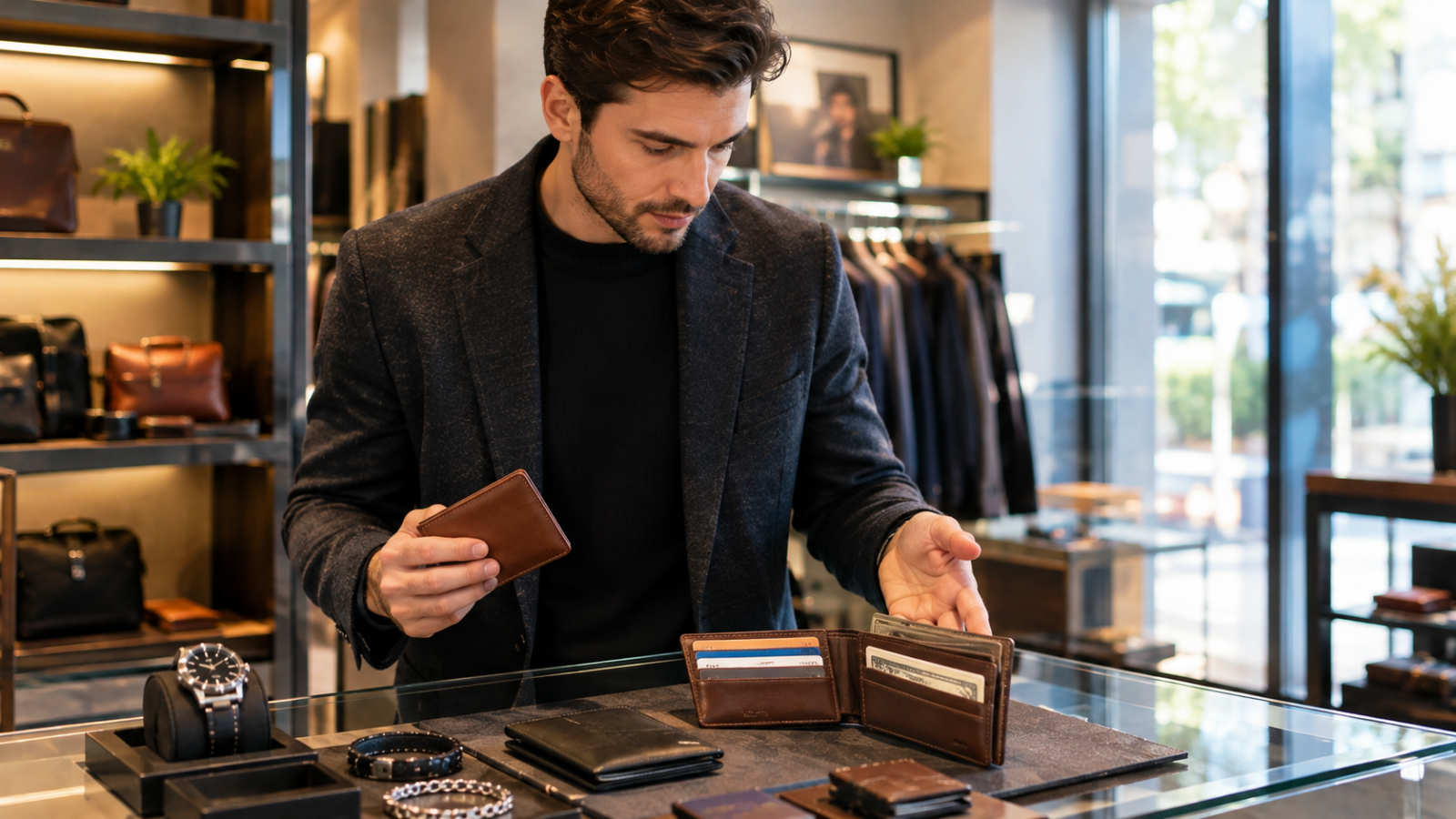
A slim vs traditional wallet comparison comes down to what you carry every day. Slim wallets suit people who want less pocket bulk and carry fewer cards. Traditional wallets offer more room for cash, receipts and extra cards. Choose a slim design for everyday simplicity, or a traditional bifold if storage matters more.
What Is the Difference Between a Slim Wallet and a Traditional Wallet?
A slim wallet focuses on carrying essentials with minimal bulk. It usually has fewer card slots and a compact shape. Some designs include a money clip or a small cash compartment.
A traditional wallet, often a bifold or trifold, provides more storage. It may include several card slots, a larger cash section and space for receipts or membership cards.
Neither design suits everyone. Your best option depends on how you pay, what you carry and where you keep your wallet.
For example, someone who mainly uses contactless payments may need only a few cards. Someone who carries cash, identification and several work cards may prefer a traditional design.
The key is to choose a wallet around your daily habits, not just its appearance.
Slim vs Traditional Wallet: Which Features Matter Most?
Before buying, compare the features that affect daily comfort and convenience.
| Feature | Slim wallet | Traditional wallet |
|---|---|---|
| Pocket bulk | Usually lower | Can become bulky when full |
| Card storage | Best for essentials | Often offers more slots |
| Cash storage | May require folding notes | Often provides more room |
| Organisation | Simple and quick | More compartments |
| Style | Minimal and modern | Classic and familiar |
| Best use | Light everyday carry | Carrying more items |
These differences depend on the specific design. A slim bifold can hold more than a basic cardholder, while an overfilled traditional wallet can become much thicker than expected.
That is why you should check the wallet’s dimensions and storage layout before purchasing.
Why Choose a Slim Wallet?
A slim wallet works well for people who prefer carrying fewer items. It reduces unnecessary bulk and can fit comfortably into many front pockets.
1. It keeps your everyday carry simple
Many people accumulate old receipts, unused loyalty cards and expired membership cards. A slim wallet encourages you to remove these extras.
Keep your essential bank card, identification and any other cards you regularly use. You can store less frequently needed documents elsewhere.
2. It suits modern clothing
Slim wallets pair naturally with fitted jeans, chinos and tailored trousers. They can also work well with a suit, where a large wallet may create a visible outline.
However, pocket placement matters too. Even a slim wallet can create discomfort if you overfill it or carry it in an unsuitable pocket.
3. It makes essentials easier to review
With fewer compartments, you can quickly see what you carry. This makes it easier to spot unnecessary items and keep your everyday setup organised.
4. It supports a minimalist style
If you prefer clean designs and practical accessories, a slim wallet can complement that preference. Black, brown and other understated colours are easy to coordinate with different outfits.
Who should choose a slim wallet?
A slim wallet is a strong choice if you carry a few cards, use digital payments frequently and want to reduce pocket bulk. It also suits people who rarely need receipts or large amounts of cash.
Explore Gentora’s men’s wallet collection to compare available styles and choose a design that suits your routine.
When Is a Traditional Wallet the Better Choice?
Slim wallets have clear advantages, but smaller does not always mean better. A traditional wallet may be more practical if you regularly carry several cards and cash.
1. You carry many cards
You might need bank cards, identification, a driving licence, work access cards and membership cards. A traditional bifold can provide separate slots for these essentials.
Still, count the cards you genuinely use. More slots can encourage unnecessary clutter rather than solve it.
2. You regularly use cash
Traditional wallets often include a dedicated compartment for banknotes. This can make cash easier to store without folding it into a small pocket.
If your daily routine involves cash payments, tips or receipts, extra space may be worth the added size.
3. You prefer familiar organisation
A traditional wallet offers a layout many people already understand. Cards sit in designated slots, while notes and receipts have their own sections.
This familiarity can make everyday use easier, especially if you dislike compact designs that require cards to be stacked or pulled out together.
4. You want a classic accessory
A well-designed leather bifold can look timeless and professional. It suits people who prefer traditional accessories and appreciate a familiar folding design.
Who should choose a traditional wallet?
Choose a traditional wallet if you carry multiple cards, use cash regularly or prefer separate compartments. Just avoid filling every slot simply because it exists.
How Can You Choose the Right Wallet for Your Lifestyle?
Instead of comparing designs in isolation, consider how you use your wallet throughout the day.
Use this simple Carry, Comfort and Access test before buying.
1. Carry: List the items you need every day. Count your cards, cash and identification rather than guessing.
2. Comfort: Think about where you keep your wallet. If you use a front pocket, look for a compact shape with smooth edges. If you use a jacket pocket, consider its depth and how the wallet sits.
3. Access: Decide how quickly you need to reach your most-used card or banknotes. Look for a layout that makes those items easy to retrieve.
4. Flexibility: Consider whether your routine changes. A commuter who uses contactless payments may need less storage than someone who travels regularly or handles cash.
5. Construction: Check the stitching, lining, seams, closures and material description. A smaller wallet still needs good construction to withstand everyday use.
This framework helps you choose based on function instead of marketing claims.
[INSERT: Add a genuine Gentora product example, material detail or customer observation about the wallet features shoppers ask for most.]
Which Wallet Is Better for Comfort and Durability?
Comfort depends on more than the wallet’s size. Thickness, shape, material and pocket placement all affect how it feels during the day.
A slim wallet often reduces bulk, especially when you carry only a few cards. However, a rigid metal cardholder may feel less comfortable in some pockets than a flexible leather design.
Traditional wallets can also remain comfortable when you organise them carefully. The problem often starts when people stuff them with old receipts, unused cards and loose paper.
Durability depends on construction and care, not simply the format. Inspect the stitching and edges, and follow the manufacturer’s cleaning instructions. Leather, synthetic materials and metal each have different care needs.
One practical rule: judge the wallet when it is loaded, not just when it is empty. A design that looks thin in a product photo may feel very different with all your cards inside.
Are Slim Wallets Safer or Better for Your Cards?
A slim wallet does not automatically protect your cards better than a traditional one. Both can keep cards organised, provided the compartments fit them properly.
Avoid forcing too many cards into tight slots. Excessive pressure can make cards difficult to remove and place unnecessary strain on the wallet.
You may also see wallets advertised with RFID-blocking protection. This feature aims to block certain wireless readings from compatible contactless cards. However, it does not protect against physical theft, online fraud or every type of payment-card fraud.
AARP’s guidance on RFID-blocking wallets provides useful context for evaluating these claims. Treat RFID blocking as a feature to consider, not the only reason to choose a wallet.
Instead, prioritise secure storage, sensible card management and a design that suits your daily routine.
What Mistakes Should You Avoid When Buying a Wallet?
A few common mistakes can turn an attractive purchase into an inconvenient one.
- Choosing by appearance alone: Check capacity, dimensions and usability before deciding.
- Buying too little storage: A cardholder may not suit you if you regularly carry cash and identification.
- Overfilling a slim wallet: This defeats the purpose of choosing a compact design.
- Ignoring pocket placement: Consider how the wallet feels in the pocket you actually use.
- Paying for features you do not need: Extra compartments and technology are useful only when they solve a real problem.
- Assuming price guarantees quality: Review material details, stitching and return terms rather than relying on price alone.
Before checkout, count your essentials and compare the wallet’s stated capacity with your actual needs.
Should You Buy a Slim or Traditional Wallet?
For most people who carry only essential cards, a slim wallet offers a convenient everyday solution. It keeps your load light and works well with modern clothing.
However, a traditional wallet remains the better option for people who regularly carry cash, several cards and additional documents. There is no reason to sacrifice useful storage simply to follow a minimalist trend.
My recommendation is straightforward: remove the items you no longer use first. Then choose the smallest wallet that comfortably holds everything you genuinely need.
Browse Gentora’s men’s accessories and explore the wallet options available for your preferred style. Choose a wallet that fits your routine, feels comfortable and offers practical storage without unnecessary bulk.
Frequently Asked Questions
1. Is a slim wallet better than a traditional wallet?
A slim wallet is better for people who carry a few cards and want less pocket bulk. A traditional wallet is better for people who need more space for cash, cards and receipts.
2. How many cards should a slim wallet hold?
Choose a slim wallet based on the number of cards you actually use. Count your essential payment cards, identification and work or travel cards, then check the manufacturer’s stated capacity.
3. Can a slim wallet hold cash?
Yes, many slim wallets include a folded-cash compartment, money clip or cash strap. However, some minimalist cardholders offer little or no space for banknotes.
4. Is a traditional bifold wallet outdated?
No, a traditional bifold wallet remains a practical and classic accessory. Its larger storage capacity suits people who carry more cards or use cash regularly.
5. Are slim wallets more durable than traditional wallets?
Neither format is automatically more durable. Material quality, stitching, construction, fit and everyday care have a greater influence on how long a wallet lasts.
6. Should I carry my wallet in my front or back pocket?
Choose the pocket that feels comfortable and keeps your wallet secure. A slim wallet often fits more easily into a front pocket, while a thick wallet may create noticeable bulk in either location.
Find the right fit with Gentora. Choose a wallet that supports your daily routine, keeps your essentials organised and matches your personal style.


Leave A Comment